Ceramic Inlays in Milwaukee, WI: Between a Filling and a Crown
For cavities too large to fill well and too small to justify a crown. A custom porcelain piece bonded into the tooth, with no metal and no dark line at the gum.Sub headline
EEAT Trust SignalsMetal-free, biocompatible materials
15 years serving Milwaukee
iTero digital scanning, no putty molds
No mercury, no metal
Some cavities land in an awkward middle. Too much tooth is gone for a filling to hold its shape, but the walls are still strong, and cutting the whole tooth down for a crown takes more than the problem calls for. A ceramic inlay fills that gap. It's a custom piece of porcelain made to fit the prepared space inside the tooth and bonded in place, which preserves the healthy structure a crown would remove. At Lake Park Dental in Milwaukee, we scan digitally and use metal-free ceramic matched to your enamel. Here's when an inlay makes sense.
WHEN YOU NEED A CERAMIC INLAY
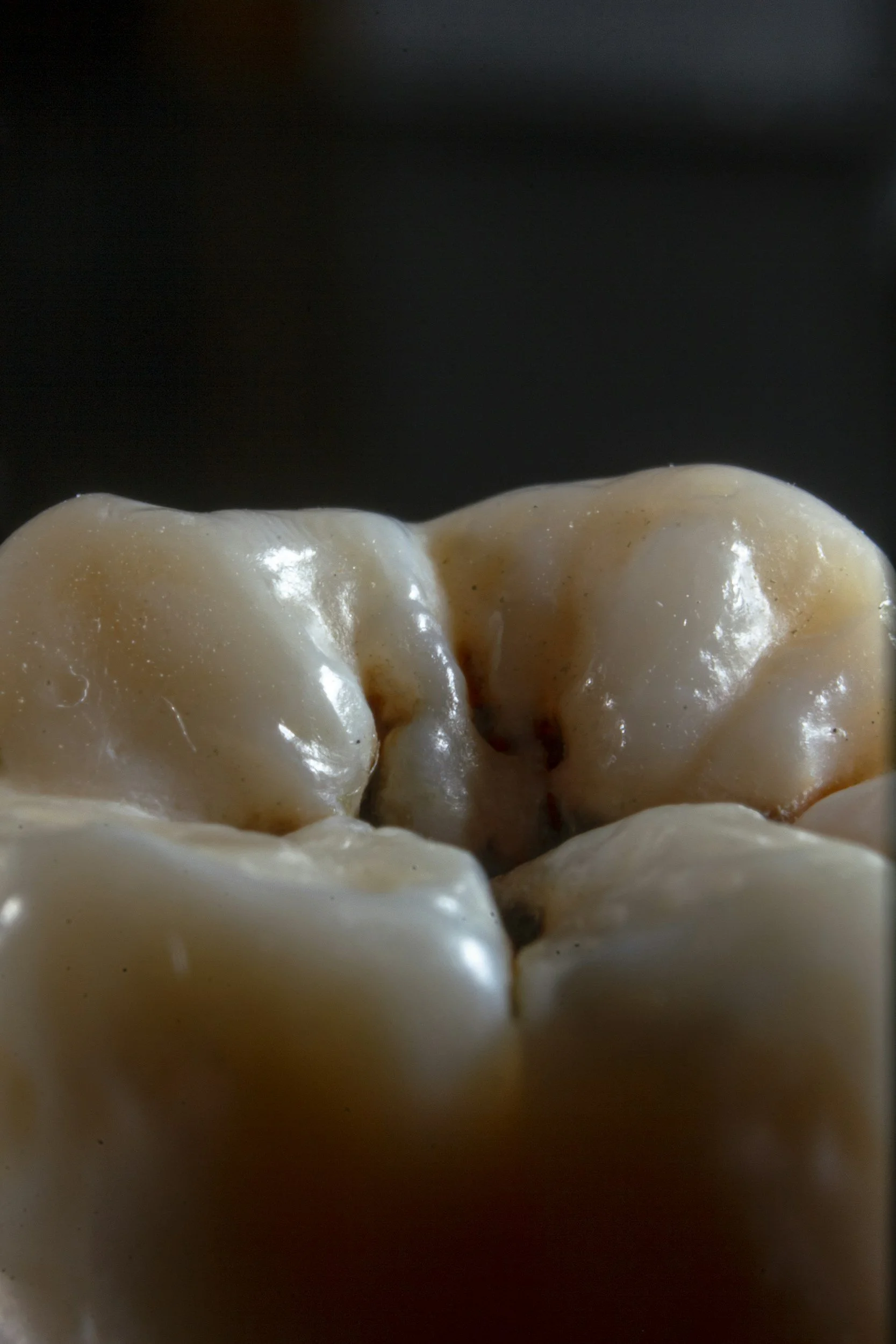
Most people don't come in asking for an inlay. They come in because a back tooth is sensitive to cold, or a filling from twenty years ago has cracked at the edge, or a checkup X-ray found decay under an old silver restoration. Large fillings flex when you chew. Over years that flexing opens a gap at the margin, bacteria get underneath, and the decay spreads sideways under the filling where you can't see it. By the time it shows up, the cavity is often bigger than the filling that replaced it.
There's no medical clock on a small cavity. But the window where an inlay is the right tool does close. As decay spreads, the walls of the tooth get thinner, and thin walls fracture under chewing pressure. Once a cusp breaks off, an inlay no longer works and you're looking at an onlay or a crown instead. Catching it earlier usually means keeping more of your own tooth. We'll show you the X-ray and tell you honestly whether it's ready to treat or worth watching for six months.
OUR CERAMIC INLAY PROCESS
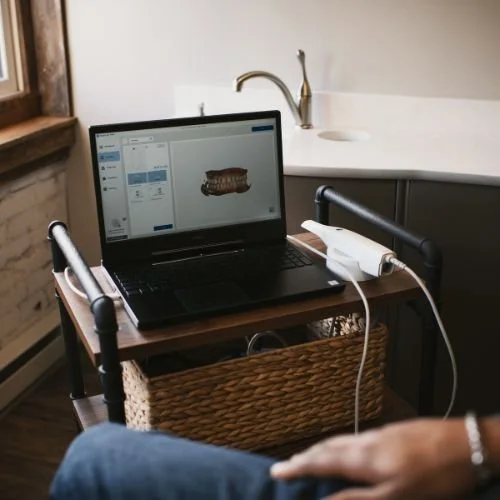
The first visit is the preparation step. We numb the area, remove the decay and any old filling material, and shape the space so the inlay seats perfectly inside your tooth. Then we scan the tooth with iTero rather than filling your mouth with putty, and that scan goes to the lab. A digital scan matters here because an inlay only works if the fit is exact. Gaps at the margin are where new decay can potentially start. You leave with a temporary in place, and the tooth is comfortable to eat on in the meantime.
At the second visit we remove the temporary, try in the inlay, and check the fit and the shade before bonding it. Once it's bonded, we adjust the bite so it meets the opposing tooth evenly. Most people eat normally that day. Some sensitivity to cold for a week or two is common and settles on its own. We check it at your regular cleanings from there.
UNDERSTANDING THE COST OF A CERAMIC INLAY
An inlay costs more than a filling and less than a crown, and the exact fee depends on the tooth and how much of it needs rebuilding. We look at it first, then put the number in writing before treatment begins, and that number is what you pay. Lake Park Dental is a fee-for-service practice in Milwaukee, and we provide detailed receipts you can submit to your insurance for reimbursement. Most plans cover inlays at the same level as other restorative work. Cherry and CareCredit are available if you'd rather spread it out.
Why Choose Us
An inlay lives or dies at the margin. Fit it loosely and decay starts underneath within a few years. Fit it well and it can outlast the filling it replaced by decades. We scan digitally instead of taking putty impressions, which removes a step where distortion creeps in, and we check the bite carefully before you leave, since a restoration that sits high takes the full force of chewing. Our materials are ceramic and porcelain with no mercury and no metal. We've been practicing in Milwaukee for 15 years and our patients can’t imagine going anywhere else.
Frequently Asked Questions about Ceramic Inlays FAQs
What's the difference between an inlay, an onlay, and a crown?
1
It comes down to how much of the tooth is covered. An inlay sits inside the tooth between the cusps. An onlay also covers one or more cusps. A crown covers the entire tooth. We choose the smallest one that will hold, because every step up removes more healthy tooth.
Does getting an inlay hurt?
2
The tooth is numbed for the preparation visit, so you shouldn't feel the work itself. The second visit is usually quicker and often needs little or no anesthetic. Cold sensitivity for a week or two afterward is normal and fades on its own.
How long does a ceramic inlay last?
3
Bonded ceramic inlays commonly last 10 to 15 years, and many go longer. They hold up better than large composite fillings because porcelain doesn't flex the way composite does under chewing. Grinding at night is the main thing that shortens their life, so we'll talk about a night guard if that applies to you.
Will my insurance cover an inlay?
4
Most plans treat inlays as restorative and cover a portion, though the amount varies by policy. We give you a written estimate before treatment and detailed receipts you can submit for reimbursement. Cherry and CareCredit are available if you want to spread the payments out.
Schedule Your Ceramic Inlay Consultation in Milwaukee
Bring the tooth in and we'll show you the X-ray, tell you whether an inlay is the right fit or whether something smaller or larger makes more sense, and give you the number in writing. Call 414-963-9440 to schedule.
Explore our full range of cosmetic dentistry services or call to schedule your consultation.