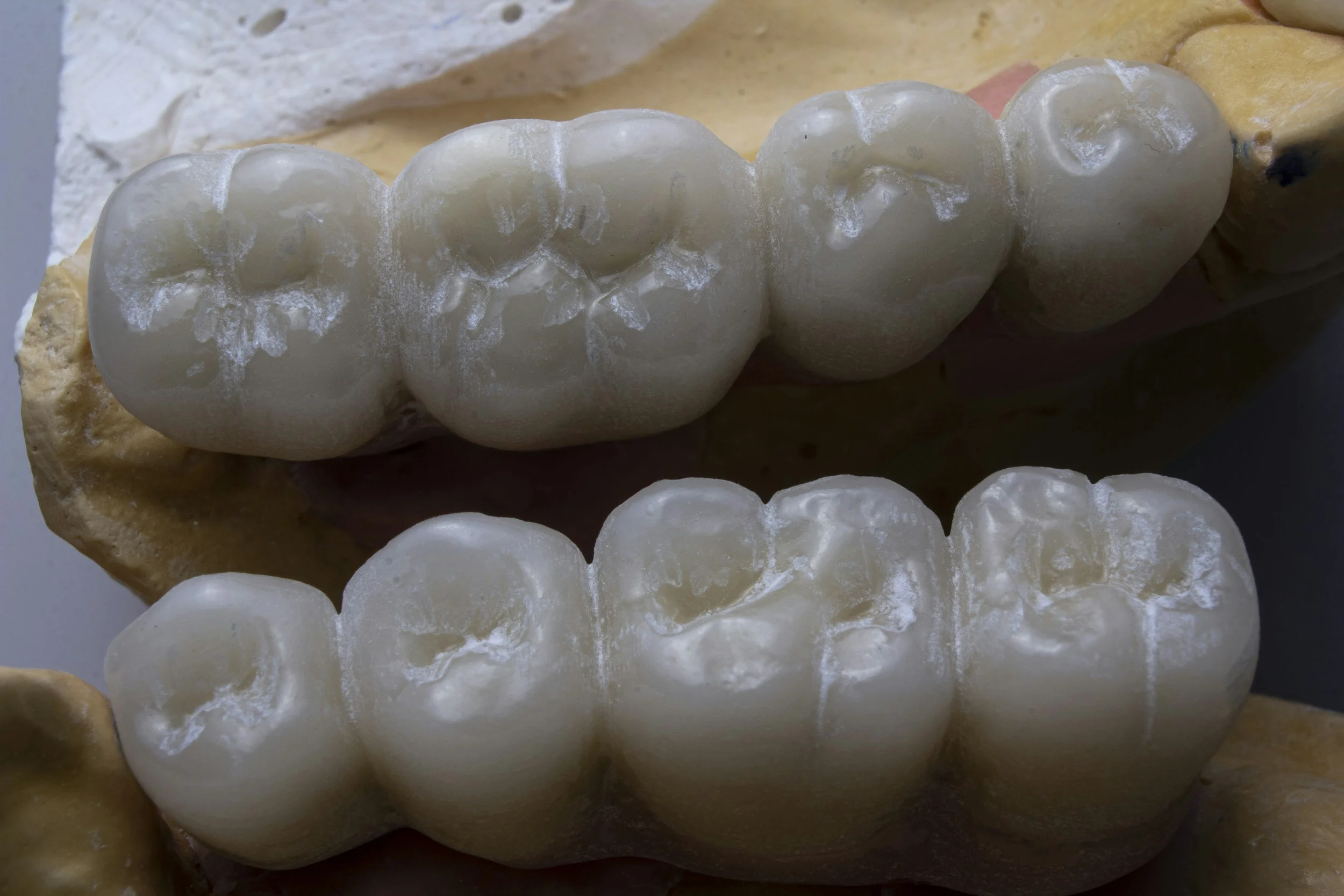
Ceramic Onlays in Milwaukee, WI: Rebuild the Cusp, Keep the Tooth
For teeth that have lost a cusp to decay or a crack. An onlay covers the damaged part and leaves the healthy walls standing, with no metal and no dark line at the gum.
EEAT Trust SignalsMetal-free, biocompatible materials
15 years serving Milwaukee
iTero digital scanning, no putty molds
Bite checked before and after placement
A cusp is one of the raised points on the chewing surface of a back tooth. When one of them cracks off or gets undermined by decay, a filling has nothing solid to hold onto, and the standard answer for decades was to grind the whole tooth down and cover it with a crown. A ceramic onlay does less damage to get to the same place. It rebuilds the missing cusp and bonds to the healthy walls that are still there. At Lake Park Dental in Milwaukee, we use metal-free porcelain and check how the tooth meets its partner before and after. Here's when an onlay is the right call.
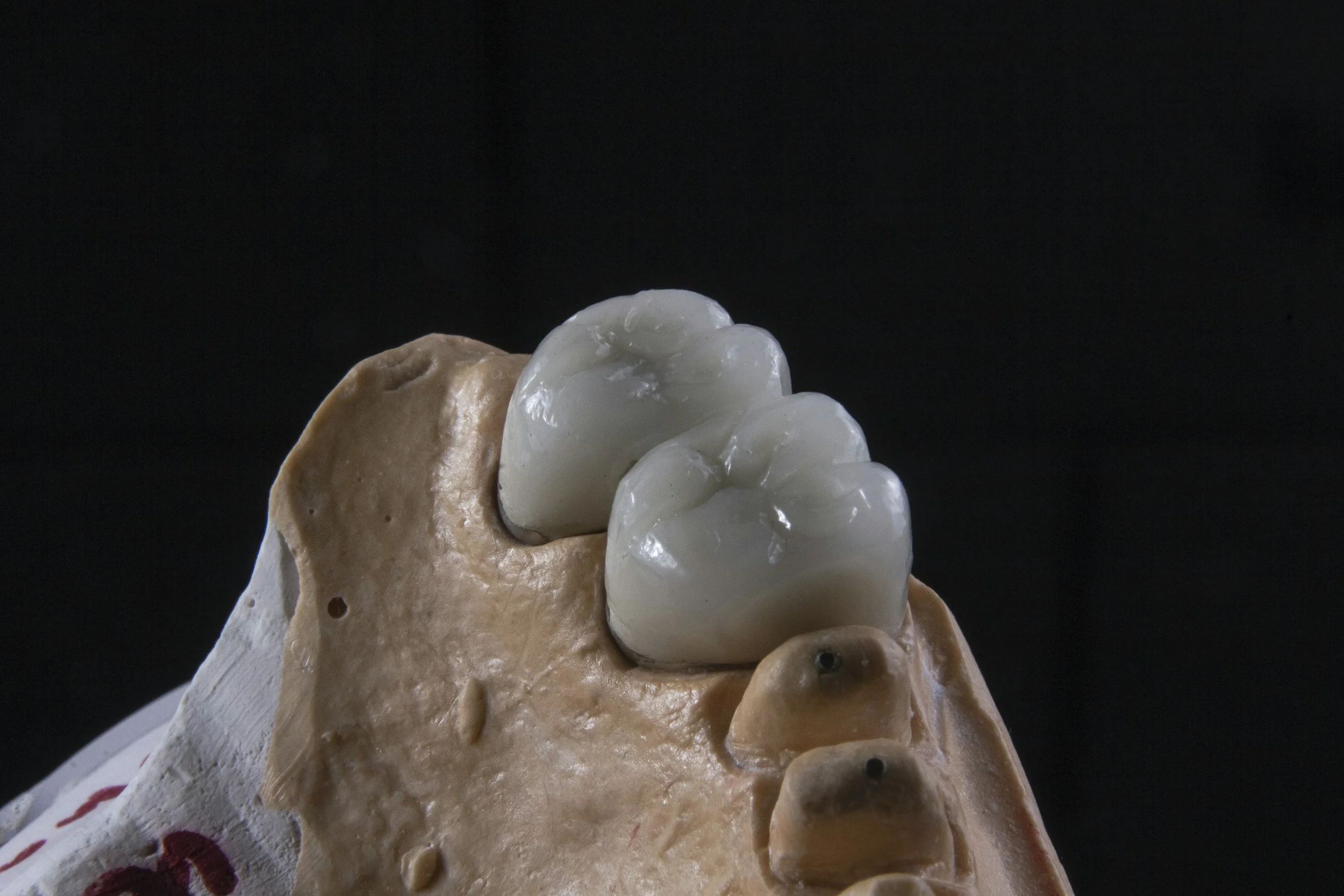
WHEN YOU NEED A CERAMIC ONLAY
Sometimes there's a moment you can point to. You bit down on an olive pit or a piece of ice and felt something give. More often it's slower than that. A back tooth starts hurting when you release the bite rather than when you press down, which is the pattern with a cracked cusp. Or a piece breaks off an old, large filling and the tooth suddenly feels sharp against your tongue. Teeth with big silver fillings are the usual candidates, because the filling wedges the walls apart a little every time you chew.[PARAGRAPH 1 — 75-100 words. Describe the common reasons patients seek this service. What do they notice? What symptoms, concerns, or issues drive them to Google and book an appointment? Write in second person to connect with the reader directly.]
A cracked cusp doesn't heal. It also doesn't always hurt right away, which is why some people carry one for months. Waiting matters more here than it does with a small cavity, because the crack tends to run deeper over time. Once it reaches the nerve, the tooth needs a root canal before anything can be built on it. Once it runs below the bone, the tooth usually can't be saved at all. Treating it while the crack is still in the crown of the tooth is what keeps the options open.[PARAGRAPH 2 — 75-100 words. Explain why timing matters. What happens if the problem isn't addressed? How does early intervention produce better outcomes or preserve options? Avoid scare tactics — frame as informed timing, not urgency pressure.]
OUR CERAMIC ONLAY PROCESS
The first visit is preparation. We numb the tooth, take out the old filling and any decay, and look at how far the crack runs, since that determines whether an onlay will hold or whether the tooth needs more. Then we shape the surface, reduce the damaged cusp, and scan with iTero rather than using a putty tray. The scan goes to the lab, where the onlay is made to fit the exact contour of what's left. You leave with a temporary and can eat on it normally.
At the second visit we try the onlay in, confirm the fit and the color, and bond it to the tooth. Then we adjust the bite, which matters more with an onlay than almost any other restoration, because the new cusp takes chewing force directly. A high spot will chip it. Most people are back to normal food that day, with some cold sensitivity for a week or two.
UNDERSTANDING THE COST OF A CERAMIC ONLAY
An onlay generally costs less than a crown on the same tooth and more than an inlay, and the fee depends on how much of the tooth is being rebuilt. We evaluate it first, then put the number in writing before treatment begins, and that number is what you pay. Lake Park Dental is a fee-for-service practice in Milwaukee, and we provide detailed receipts you can submit to your insurance for reimbursement. Most plans cover onlays as restorative work. Cherry and CareCredit are available if you'd rather spread payments out.

Why Choose Us
An onlay asks two things of the dentist. Read the crack correctly, and get the bite right. Misjudge how deep the crack runs and the restoration goes onto a tooth that needed a root canal first. Leave the new cusp sitting even slightly high and it takes the full force of your chewing until it chips. We check both carefully, and we use digital scanning instead of putty so the lab is working from an exact record. Our restorations are ceramic and porcelain with no mercury and no metal, and we've been in Milwaukee for 15 years.
Frequently Asked Questions about Ceramic Onlays FAQs
Why an onlay instead of a crown?
1
A crown requires reducing the entire tooth on all sides. An onlay covers only the damaged cusp and bonds to the healthy walls that are left. Less tooth removed means less stress on the nerve and more structure to work with if the tooth ever needs treatment again.
Will the tooth still be sensitive after the onlay?
2
Mild sensitivity to cold for one to two weeks is common while the tooth settles. Pain that lingers or gets worse after a few weeks can mean the crack reached the nerve, and that's worth a call. Most teeth quiet down on their own.
How long does a ceramic onlay last?
3
Ten to fifteen years is typical, and many last well beyond that. The two things that shorten it are grinding at night and a bite that wasn't adjusted properly at placement. We check the bite before you leave, and if you grind we'll talk about a night guard as part of the plan.
Does insurance cover onlays?
4
Most plans treat them as restorative and cover a portion, often at the same level as crowns. The amount varies by policy. We give you a written estimate up front and detailed receipts you can submit yourself, and Cherry and CareCredit are available.
Schedule Your Ceramic Onlay Consultation in Milwaukee
If a back tooth has broken, feels sharp, or hurts when you let go of a bite, bring it in and we'll tell you what's happening and what it needs. You'll get the plan and the number in writing. Call 414-963-9440 to schedule.
Explore our full range of cosmetic dentistry services or call to schedule your consultation.