Does Invisalign Reshape Your Teeth? What Happens After Treatment in Milwaukee

Invisalign Moves Teeth - It Doesn't Reshape Them
Invisalign does not reshape your teeth. It moves whole teeth through bone into new positions, and the size and shape of each tooth stays exactly what it was. The one exception is a small, optional polish between certain teeth to make room, and you'll hear about that before anything starts.
Teeth aren't set in your jaw the way tile is set in grout. Each root sits in its own socket, wrapped in a thin ligament, and that ligament responds to steady pressure. Push gently for long enough and bone dissolves on one side of the root while new bone builds on the other. That's the mechanism: aligners apply light, constant force, and bone remodels around it.
So the crown you see in the mirror, the enamel part, comes out the far end the same size it went in. Same width, same edges, same outline. It's standing somewhere else.
We hear this worry often in our Milwaukee chair. People imagine a tooth being filed down thin so it fits a straighter line. Straightening a crowded row of parked cars on Downer Avenue doesn't shrink the cars, it repositions them.
What aligners change:
Where each tooth sits in the arch, front to back and side to side
How far a tooth is tipped or rotated in its socket
The spacing between teeth, opening gaps or closing them
How your upper and lower teeth meet when you bite down
None of that touches tooth structure.
There is one honest exception, and we'd rather you hear it from us than find it mid-treatment. Interproximal reduction is a hair-thin polish between two teeth to create room in a crowded arch, measured in fractions of a millimeter and kept well inside the enamel layer. Not every case needs it. When a case does, it shows up on the plan before anything begins.
Attachments confuse people too. Those small tooth-colored bumps we bond to certain teeth give the plastic something to grip. They come off at the end, and the enamel underneath is untouched.
Your smile does look different afterward, and that isn't reshaping either. A tooth that was rotated back into shadow now catches light across its whole face. A worn edge that used to hide becomes visible. The tooth didn't change. The angle did.
Sometimes that shows something worth addressing: a chipped corner, uneven edges from years of grinding. Those are separate conversations with separate answers, and we get to them further down.
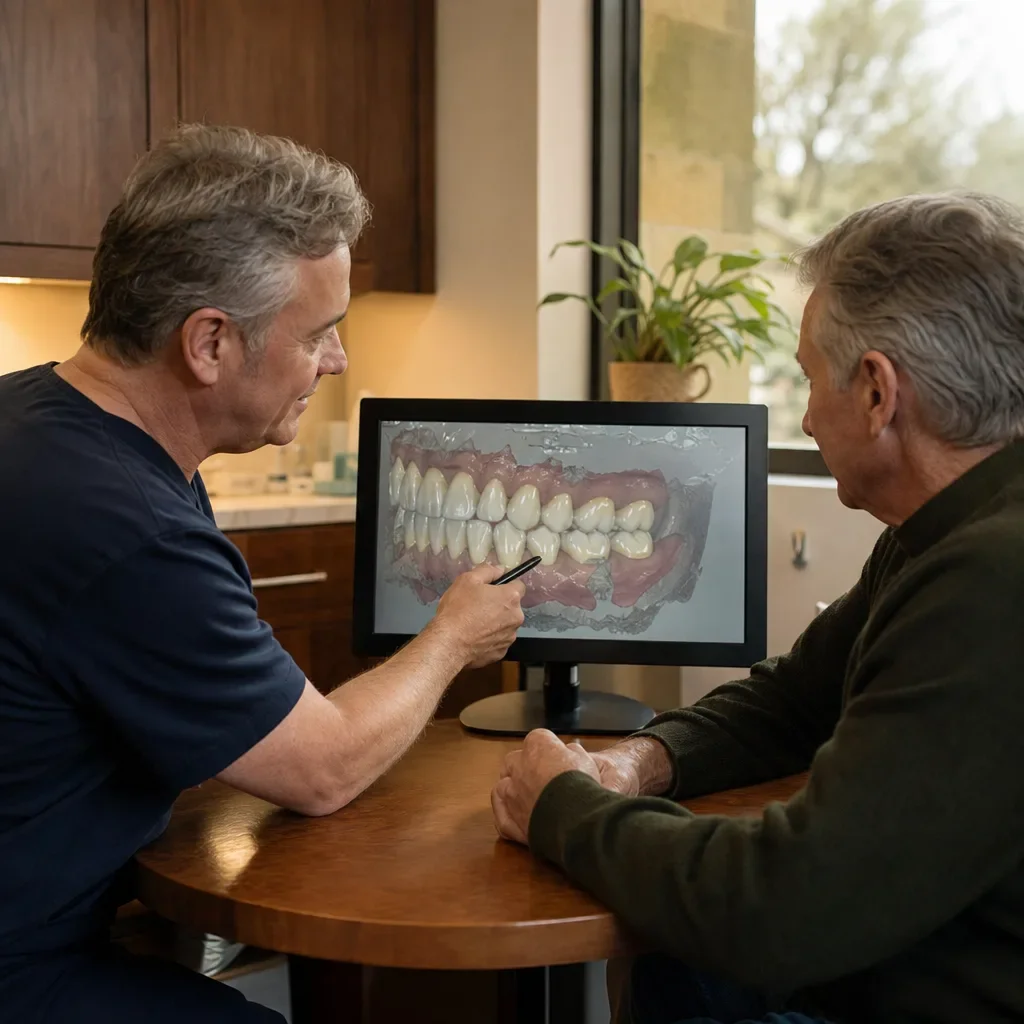
How Teeth Move Under Clear Aligners
The short answer to "does Invisalign reshape your teeth" is that it doesn't. What changes during treatment is the bone around the root.
Every tooth is held in its socket by a thin band of ligament fibers. Press steadily on one side and the body responds: bone dissolves on the pressure side, new bone forms on the side being pulled away from. Slow remodeling, week after week. Orthodontics has understood that process for well over a century.
Each aligner is shaped slightly differently than your current bite, maybe a quarter of a millimeter. You snap it in, feel that tight pressure for a day or two, and then it fades. The fade means bone has caught up to where the plastic was pushing the tooth.
The sequence looks like this:
A digital scan maps your teeth in three dimensions, root angles included.
We plan the finish position first, then work backward to build the stages.
Small tooth-colored attachments get bonded to certain teeth so the plastic has something to grip.
Each tray applies light force to a few specific teeth, not all of them at once.
Bone remodels around the moving roots over roughly one to two weeks per tray.
You switch to the next tray and it repeats.
At the end, bone has to finish hardening around the new positions.
The attachments do more than people assume. Smooth plastic can tip a tooth without much trouble, but rotating a stubborn lower canine or uprighting a root takes a grip point, and those small bumps are how Invisalign clear aligners manage movements the plastic couldn't handle on its own. Most patients stop noticing them within a week.
Someone points at a tooth almost every week and asks whether we're going to file it down to make it fit. Usually the answer is no. Occasionally we'll do a very small amount of enamel shaping between teeth to create space, and that's a separate decision we talk through with you first. It isn't part of how the aligners work.
The tooth keeps its shape. Its position changes.
Healthy gums and solid bone are what make any of this possible, which is why we look closely at gum health before planning movement. The ADA's overview of orthodontics frames the goal as a bite where teeth meet properly, not simply teeth that look straight from the front.
Bone is living tissue, so it keeps responding after your last tray comes out. How you handle those first months is part of the practical invisalign guidance we go over at your final visit.
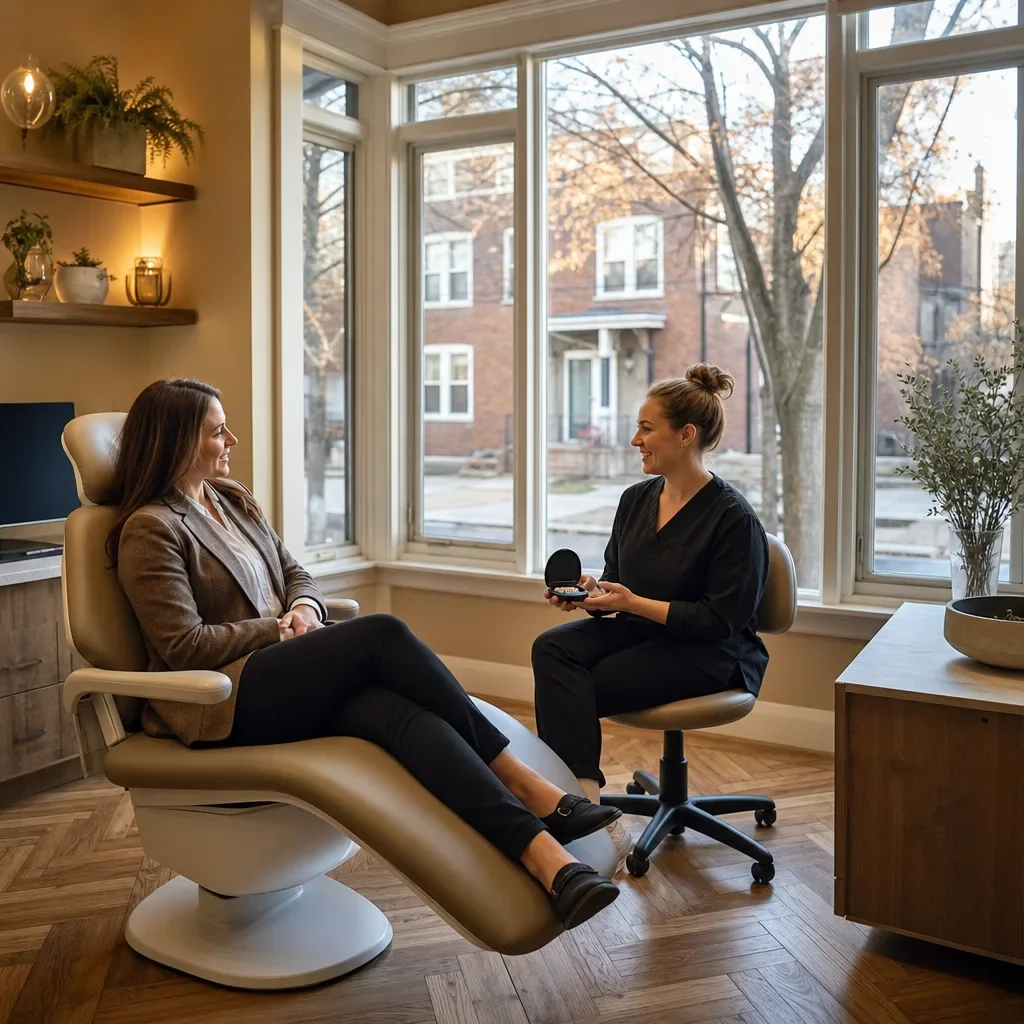
What to Expect Once Your Aligner Treatment Ends
The last tray comes out and you run your tongue along the front of your teeth. Everything sits somewhere different than it did a year ago. That's usually the moment people believe it worked.
Finishing the trays isn't the end of the work. Your teeth moved through bone, that bone needs time to firm up around the new positions, and the fibers around each root are still adapting, which is why teeth drift back most readily in the first few months.
How the weeks after your final tray usually go:
We take a final iTero digital scan of your finished bite.
Attachments come off and those surfaces get polished smooth.
Your retainers are made from that scan, so they match your teeth exactly.
You wear them full time at first, then step down to nights.
We check the fit at follow-ups and watch how the bite settles.
The settling surprises people. For a few weeks the back teeth find each other again, chewing feels slightly different, and then one morning it feels normal. Steak, apples, a crusty roll.
Common in the first month:
A slight lisp for a day or two with a new retainer
Teeth feeling loose or tender when the retainer comes out in the morning
Small spots where the bite touches sooner than it used to
Gums looking tighter and healthier once trays and attachments are gone
None of that means something went wrong. Your mouth is adjusting to a new arrangement.
One more thing worth saying plainly. Invisalign moved your teeth; it did not reshape them. If a tooth was chipped, worn flat from grinding, or a little irregular in its own outline, straightening the arch won't change that edge. Some patients finish and want a small amount of enamel shaping or composite bonding to even things out. Others are done and happy. We talk about it in person, after the scan, looking at the actual teeth.
If you grind at night, we'll tell you. A night guard protects what you just spent a year building.
Gum health matters here too. Teeth in better positions are easier to clean, and crowding that used to trap plaque no longer does, which counts for something over the next thirty years. NIDCR's overview of periodontal disease explains how the tissues holding teeth in place break down when plaque sits undisturbed along the gumline.
Teeth stay straight as long as you keep wearing retainers. Skip them for a few months and the retainer will feel tight going in, which is your early warning. Wear them at night and the result you worked for holds.
If you want to talk about clear aligners, or about what to do now that your last tray is out, reserve your visit or call us at 414-963-9440. We're at 2524 E Webster Pl #201, open Monday through Thursday.
Frequently Asked Questions
Do teeth go back to their old spot after Invisalign?
Teeth can drift back if you skip your retainer, because the bone around each root is still hardening into its new shape. That settling takes months, not days. Skipping retainer wear even for a few weeks can let teeth start sliding toward their old spots. Our Milwaukee patients who stay consistent with retainers keep their results for years.
Why do my teeth feel loose during Invisalign treatment?
Loose-feeling teeth are normal during treatment, because the ligament around each root stretches to let the tooth move. The tooth is never detached. That feeling fades once you switch trays and the bone catches up. Teeth also sit slightly loose right after you take a tray out, which is one reason the 30-minute rule matters. If a tooth still feels wobbly weeks after you finish, call us.
Can Invisalign fix a crooked smile without changing tooth shape?
Yes, Invisalign straightens a crooked smile by moving teeth, not by reshaping them. The crown keeps its original size and outline the whole time. What looks different afterward is the angle each tooth sits at, not the tooth itself. Whether you're ready to start depends on your gums, your bone, and your permanent teeth, which we cover in our guide to the best age to get Invisalign.
Why do some Invisalign patients need small gaps filed between teeth?
Some patients need a thin polish between teeth, called interproximal reduction, to make room in a crowded arch. It is not reshaping the whole tooth. It's a fraction of a millimeter, done well inside the enamel layer. If your case needs it, you'll see it marked on your plan before treatment starts.
