What's the Best Age to Get Invisalign? A Complete Guide for 2026 in Milwaukee
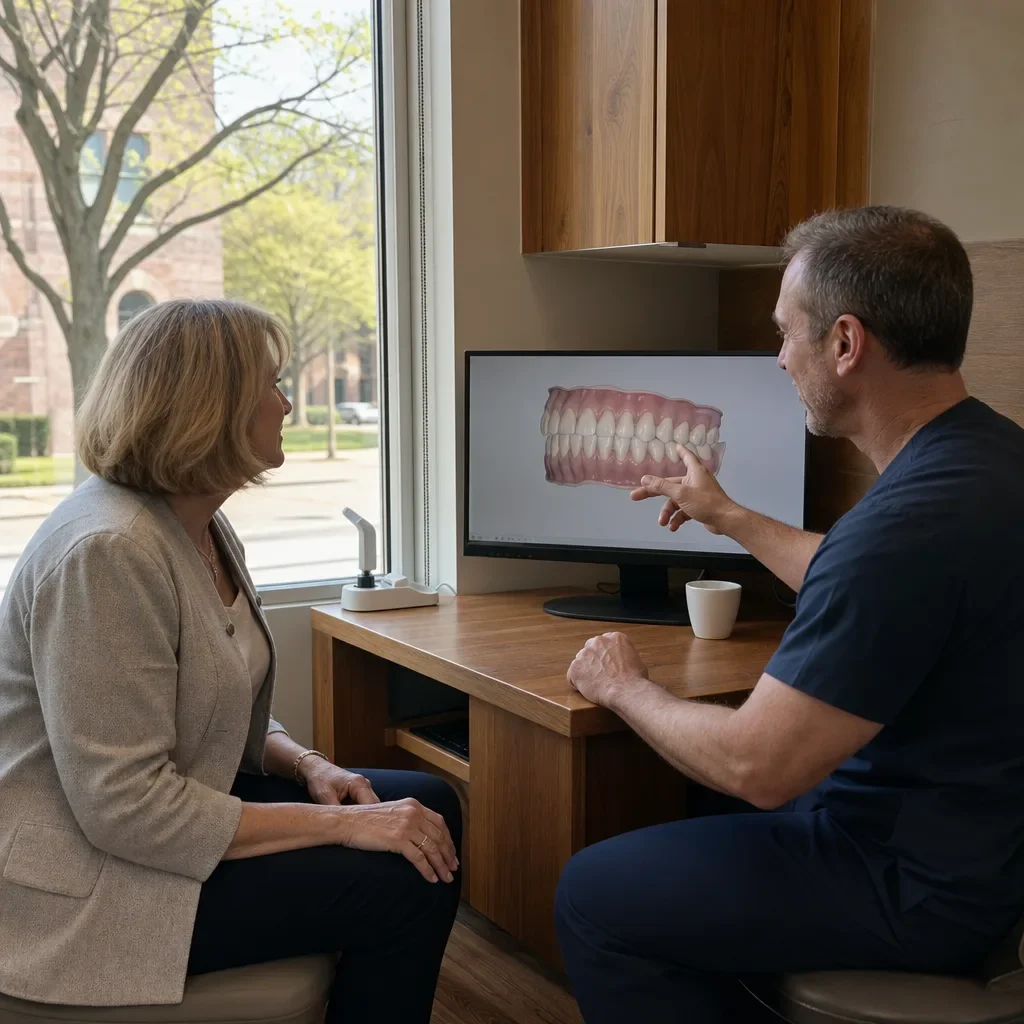
There Is No Single Best Age for Invisalign
There is no single best age to get Invisalign. What matters is whether the adult teeth are in, the gums are healthy, and the person will actually wear the trays. Readiness decides this, not your age.
Teeth move at 14. They move at 64. Bone remodels around a tooth under steady, gentle pressure, and that process doesn't stop at one particular age.
What changes with age is how fast teeth move, and what else is happening in the mouth while they do. A fourteen-year-old with a full set of adult teeth and clean gums is straightforward. A fifty-two-year-old with the same crowding might be equally straightforward, or might need gum treatment first. Same treatment, different starting line.
So the better question is what makes someone ready.
Most or all permanent teeth have come in
Gums are tight and healthy, with no bleeding when you brush
No untreated decay or broken teeth waiting for attention
The person can wear trays 20 to 22 hours a day
There's a clear reason to treat: crowding, spacing, or a bite wearing teeth unevenly
None of those are ages. Every one of them is something we can see at an exam.
People wait ten years because they assume they missed their window, and the crowding gets worse the whole time. Lower front teeth tend to drift inward and overlap as you get older, and that's one of the most common things we look at across the chair.
A patient came in last spring, sixty-one, apologizing before she'd even sat down. She'd been told as a teenager to do something about her bite and never did. Her gums were healthy. Her bone was solid. Age had nothing to do with whether she could start.
Older teeth do sometimes move a little slower, and the plan may need to account for existing crowns, fillings, or worn edges. That's information we build the treatment plan around.
On the younger end, the limit isn't maturity in the abstract. It's whether the permanent teeth have arrived, and whether that thirteen-year-old will keep the trays in through lunch at school. Some thirteen-year-olds manage it better than some thirty-year-olds.
The only way to know where you stand is an in-person look at your teeth, gums, and bite. We're on the second floor at 2524 E Webster Pl, and you can get in touch to set that up.
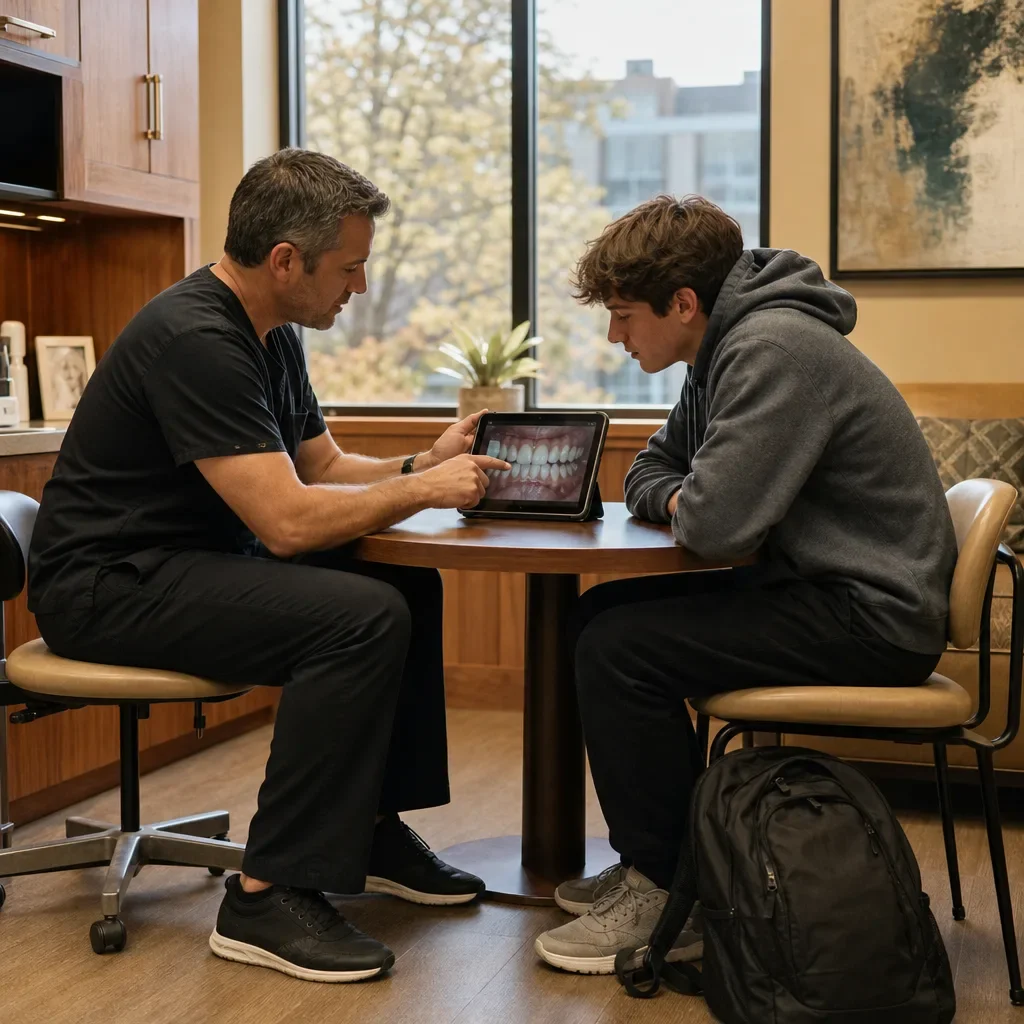
What Determines Readiness for Teens
We've treated eleven-year-olds who were completely ready and sixteen-year-olds who weren't. What matters is what's happening inside the mouth, and what's happening in the kid's daily habits.
Two things have to line up. The teeth need to be at a stage where moving them makes sense, and the teen has to wear the trays.
Most kids lose their last baby tooth somewhere between eleven and thirteen. Second molars usually arrive around twelve or thirteen. Until those are in, the back of the bite is still rearranging itself, and starting too early can mean redoing work later.
What we look at during an exam:
Tooth eruption. How many permanent teeth are in, and are the second molars through the gum yet? A digital scan and X-rays answer that in minutes.
Jaw growth. Is the lower jaw still catching up to the upper one? Growth can work for us or against us depending on timing.
Bite function. We watch your teen chew and close. Where do the teeth hit first? Is there a click on opening wide?
Oral hygiene. Aligners hold whatever is already on the teeth against them. If brushing is sloppy now, we fix that before we start.
Responsibility. Trays need 20 to 22 hours a day. Can this kid keep track of a case at lunch?
The teen's own buy-in. A teenager who wants straighter teeth wears the trays.
That last one surprises parents, and it's the single biggest predictor we see. A motivated thirteen-year-old outperforms a resentful sixteen-year-old.
A Shorewood family came in last fall with a seventh grader who still had two baby molars hanging on. We took the scan, showed them the images on the screen, and told them to come back in eight months. They appreciated the honesty more than they would have appreciated a yes.
There's a practical side too. Teen aligners include small blue compliance indicators that fade with wear, so nobody has to take a teenager's word for it. Parents like that.
Sports don't rule it out either. Aligners come out for contact sports and a mouthguard goes in instead.
One thing we check that gets skipped elsewhere: how the jaw moves, not just how the teeth look. If there's tension along the jawline or a click when your teen yawns, we want to know before anything moves. Straightening teeth without looking at how the bite functions leaves half the problem in place. The ADA's overview of orthodontics makes the same point: the goal is a bite where teeth meet properly, which makes chewing and speaking easier.
Sorting through timing questions like these is part of the practical invisalign guidance we give families at that first visit.

What Determines Readiness for Adults, Including Those in Their 40s, 50s, and 60s
Teeth move because of pressure and time, and that's as true at 58 as it is at 18.
The condition of the tissue around your teeth decides readiness far more than your age does. Healthy gums, solid bone, a bite that closes without pain. We see patients in their sixties finish Invisalign with results that surprise their own families, and we see thirty-year-olds who need gum treatment before they can start.
What we look at during an adult exam:
Gum health. Inflamed or receding gums need to settle before teeth move. Moving a tooth through unhealthy tissue is a bad trade.
Bone support. Digital X-rays and CBCT 3D imaging show how much bone is holding each root. Adults who've had gum disease sometimes have less than they expect.
Existing dental work. Crowns, bridges, veneers, and implants all change the plan. Implants don't move, so everything around them gets mapped around that fact.
Bite and jaw function. A click when you yawn, or sore temples in the morning, is something we want to understand first.
Untreated decay or infection. Fillings and active problems come before aligners. Always.
Adults bring history to the chair, and that history is useful. A tooth that shifted after a molar came out in your twenties tells us something about how your bite has changed since. So does the wear on your front edges from years of grinding.
Gum disease is the piece most adults underestimate. It's the leading cause of adult tooth loss, and NIDCR's overview of periodontal disease describes how the tissues holding teeth in place break down when plaque hardens along the gumline. We check that before we plan any movement.
A patient came in last winter, mid-fifties, from Shorewood. She'd wanted straighter lower teeth since college and assumed a bridge she'd had for fifteen years ruled her out. It didn't. We planned around it with iTero digital scanning and cleaned up the crowding. The bridge stayed put the whole time.
Adults do tend to move a little slower than teenagers, since bone in a mature jaw remodels at a gentler pace. That adds time, not difficulty. Adults also wear the trays, and compliance is the biggest variable in how fast any of this goes.
There are reasons beyond appearance to straighten teeth in your fifties. Crowded teeth hold plaque where floss can't reach. A bite that lands wrong wears enamel down year after year. Fixing alignment later in life often protects what's left.
Retention matters more for adults too. Teeth that sat in one position for thirty years drift back readily, so a retainer is part of the result rather than an add-on. We'd rather tell you that now than after.
A word about cost, since it comes up in every one of these conversations. Lake Park Dental is fee-for-service and out of network with all insurance, so we don't bill your carrier. We give you a detailed receipt to submit for reimbursement, we offer an in-house membership plan for patients without insurance, and we work with Cherry and CareCredit for financing. You'll have pricing in writing before treatment begins. Call us for current details on the membership plan.
The exam is where this question actually gets answered. We'll scan your teeth, look at your gums and bone, watch how your bite closes, and tell you plainly whether now is a good time to start or whether waiting makes more sense. Schedule an appointment or call 414-963-9440. We're open Monday through Thursday in Downer Lakeview Commons, with free street and on-site parking.
Frequently Asked Questions
What is the best age to get Invisalign?
There is no single best age to get Invisalign, though most patients start once all their permanent teeth are in, often around twelve or thirteen at the earliest. After that, healthy gums and steady wear time matter far more than age. We have started patients in their sixties.
Is 50 too old for Invisalign?
No, 50 is not too old for Invisalign. Teeth move at any age as long as the gums are healthy and there's enough bone holding each root. Your plan may need to work around crowns, bridges, or old fillings. Treatment can take a little longer than it would for a teenager.
Can a 12-year-old get Invisalign?
Sometimes, yes. A twelve-year-old can start if the permanent teeth are in and the second molars have come through the gum. If baby teeth are still hanging on, we'd rather wait a few months than start early and redo the work later. A scan and X-rays tell us which it is.
Does Invisalign take longer for adults?
Often yes, by a few months. Bone in a mature jaw remodels more slowly, so each tray may need a little more time. Adults usually make up for it by wearing the trays consistently, and staying inside the 30-minute window after meals is the habit that moves treatment along fastest.
Is Invisalign worth it after 40?
Yes, for most adults over 40 it's worth it. Straighter teeth are easier to clean, and an even bite spreads chewing force instead of wearing down a few teeth. Aligners move teeth into better positions without changing their shape, which we explain in our guide to whether Invisalign reshapes your teeth.
