Full Mouth Reconstruction for Glendale and North Shore Patients in Milwaukee
It rarely arrives all at once. A crown that fails. A back tooth that finally cracks during dinner. The morning your jaw stays sore past coffee. Then another molar gone, and a partial that never quite sits right. You stop counting fixes and start counting what's left.
This is how most of our reconstruction patients from Glendale and the North Shore arrive. Not from one decision — from twenty years of small ones. Worn teeth, old crowns failing, missing molars, a bite that's quietly collapsing. The Port Washington Road commuters, the Fox Point families, the River Hills retirees — different lives, same story.
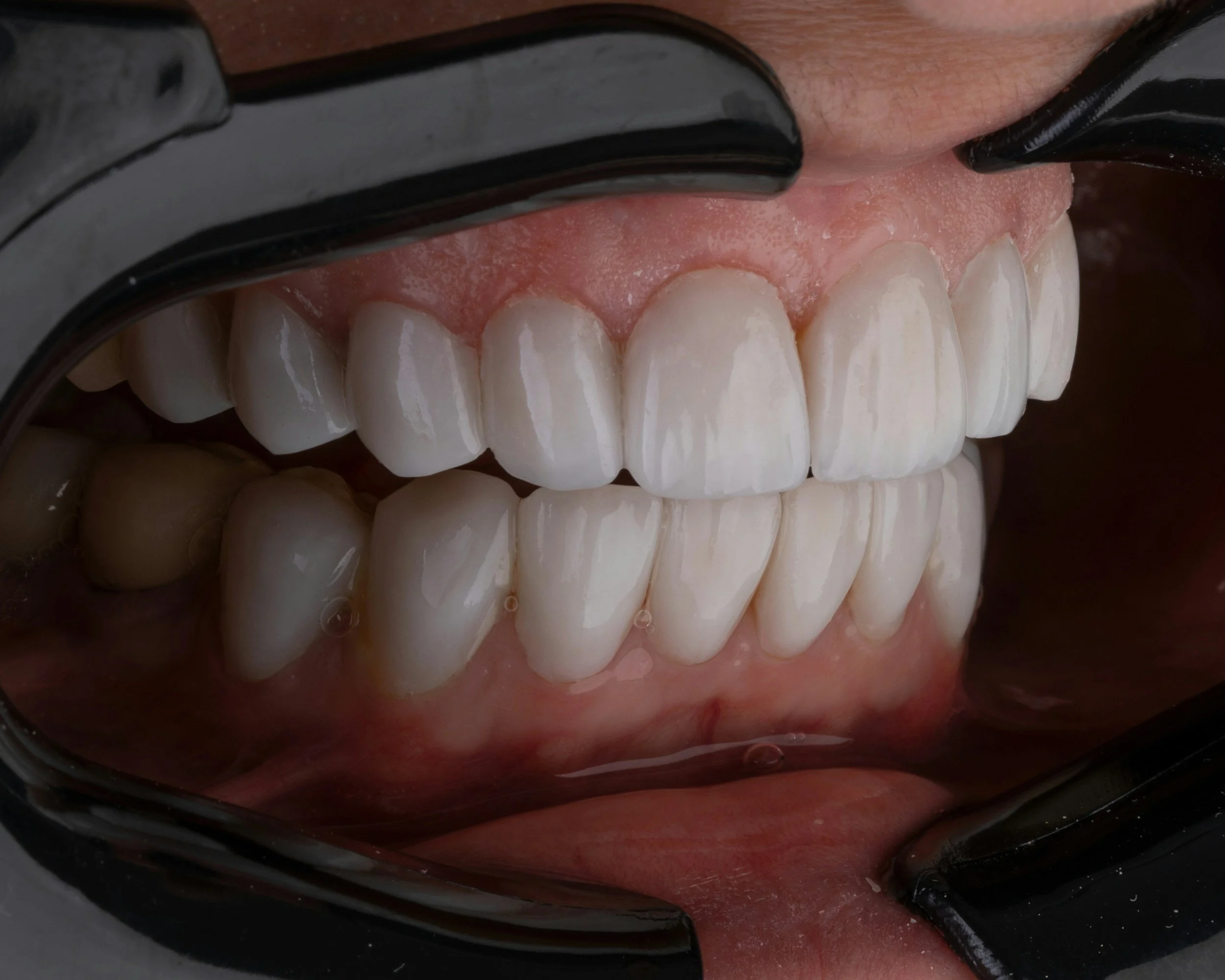
Full mouth reconstruction is the opposite of more patching. It's one coordinated plan that addresses the whole mouth at once — implants where teeth are missing, ceramic crowns and veneers where they're broken, gum and bite work where the foundation is failing. Done right, it's the last big dental decision you make.
What follows covers how that plan gets built, what the visits look like over several months, and why I-43 makes the trip simple. Schedule an appointment or call 414-963-9440 when you're ready to start with a real exam and a CBCT scan.
Years of Wear and Failed Dental Work Add Up to One Problem
The patients we see from Glendale and the surrounding Nicolet district tend to be 50 and up. Many are commuting south on I-43 every morning. Some have retired and are spending winters in Florida. The dental histories are different in the details, alike in the shape.
The signs that build over years:
Front teeth that look shorter than they used to
Crowns that have been replaced two or three times
A back molar gone, then another, and a partial trying to bridge the gap
Headaches in the temples, jaw soreness in the morning
Food choices shrinking — softer breads, no apples, chewing on one side
None of these on their own demands a full plan. Together, they describe a mouth that's stopped working as a system.
Here's the part to name plainly. This isn't your fault. The standard model — wait, watch, replace one tooth at a time — was always going to lead here for some patients. Twenty years of patches add up to a foundation that needs rebuilding. You're not behind. You're at the point where a different question becomes the right one.
One Coordinated Plan Beats Fixing Teeth One at a Time
A full mouth reconstruction isn't a single procedure. It's a sequence — implants, crowns, bridges, veneers, gum therapy — built in the order that lets each piece support the next.
What that means in practice:
The bite gets designed first. Beauty sits on top of function, not the other way around.
Implants go where teeth are missing, so the new bite has anchors.
Crowns and onlays go where teeth are broken but salvageable.
Veneers join the plan only if cosmetics are part of your goal.
Gum therapy or alignment work joins the plan if the foundation needs it.
The big shift is that there's a defined endpoint. No more "we'll watch it." The American Dental Association explains how crowns and bridges fit into broader restorative care, but the difference here is that they're planned together, not one at a time.
Patients arrive from Fox Point, Bayside, River Hills, and the Nicolet district communities. The reasons vary. The need for one trusted team — instead of three separate referrals — is the same.
Imaging and Design Come First, So Nothing Is Guesswork
You don't commit to anything before you see it.
The planning visit runs through three pieces of imaging. A CBCT scan evaluates bone, joints, and tooth roots in three dimensions. An iTero scanner builds a digital model of your bite, so we can see exactly how the upper and lower teeth meet — and where they're failing each other. Digital Smile Design previews the finished smile on screen.
The output is one written, phased treatment plan. You take it home. You read it without anyone hovering. You bring your spouse to the next visit — this is a household decision, and we treat it that way.
A small Glendale detail: plan-review appointments work well before a Bayshore errand run or after a morning walk through Kletzsch Park along the river. We're not far. Reserve your visit when you're ready to see the plan in writing.
Reconstruction Happens in Planned Phases You Can Schedule Around
The whole plan never gets done in one visit. That's the point.
Here's the typical order:
Foundation. Gum therapy, extractions, bone grafting where needed.
Implants. Placed with computer-guided surgery, then time for the bone to integrate.
Restorations. Crowns, bridges, and the final implant teeth.
Refinements. Bite adjustments, a night guard, the small details that hold it all together.
Each phase has a healing window. We map those on a calendar at the start, so you know what the next twelve months actually look like.
Sedation runs the full menu — nitrous oxide, oral sedation, twilight or IV sedation, general anesthesia. The longer surgical visits stay comfortable because of it. Work and travel get planned around. Snowbirds heading to Naples or Marco Island in November can phase the heavy work around their winters away — we've done it many times.
Morning visits start at 8 AM, which fits North Shore commutes south on I-43.
Metal-Free Materials and Healing Protocols Protect the Result
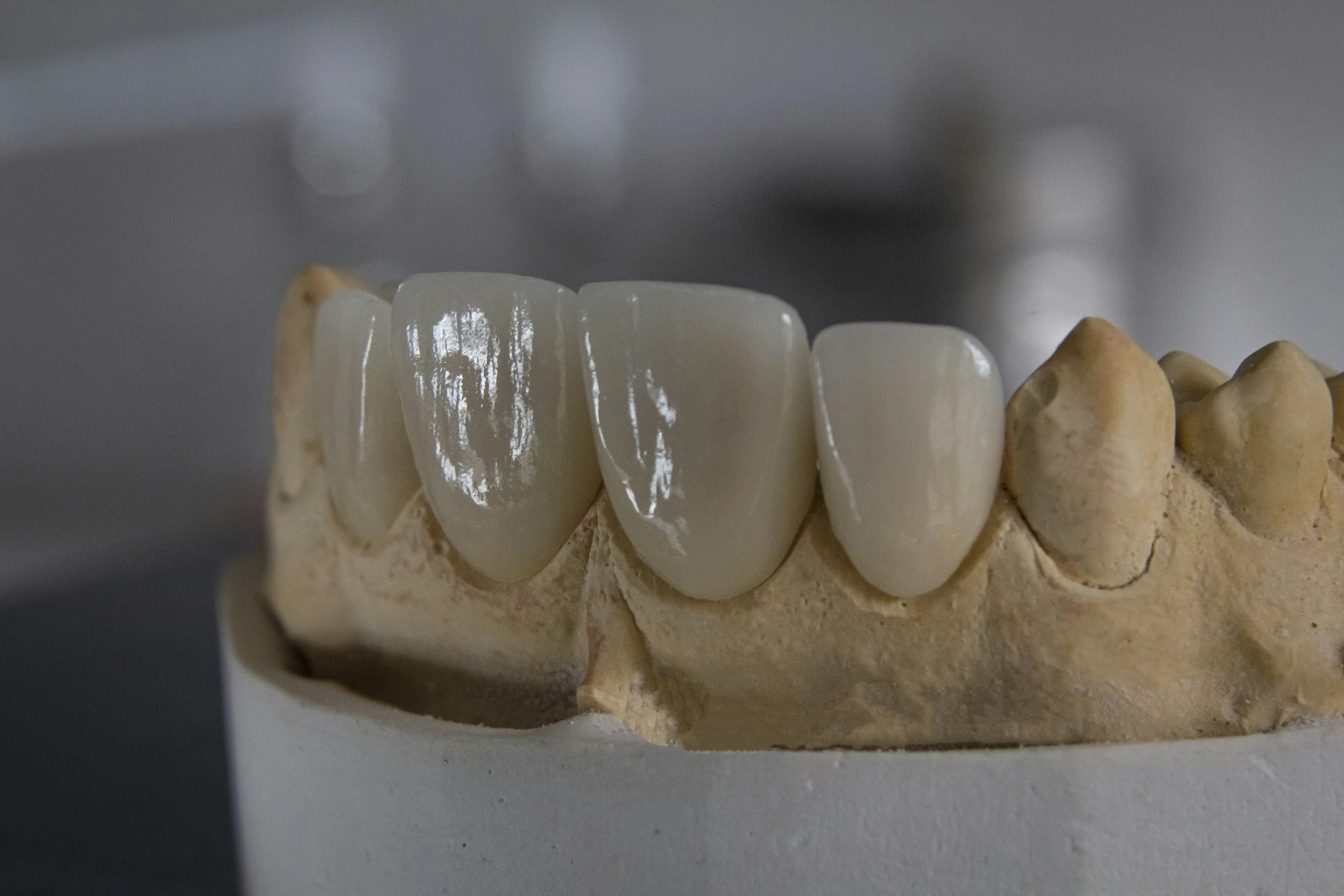
The materials choice matters as much as the bite design.
The restorations here use porcelain, ceramic, and zirconia — no metal, no mercury. For patients who want a fully metal-free mouth, zirconia implants are available too. That option is rare among Milwaukee-area implant providers, and it draws wellness-minded patients from Whitefish Bay and Shorewood who specifically search it out.
We also use PRF therapy during surgical phases. PRF is short for platelet-rich fibrin — drawn from your own blood, spun down, and placed at the surgical site to support healing. Your body, doing what it already knows how to do.
Between phases, integration and bite checks happen before anything advances. The point of all this is one rebuild that lasts decades — not another five-year patch. That's the trade for going slower. Slower visits. Longer-lasting results.
From Glendale, I-43 Puts Our East Side Office Minutes Away
Our office is at 2524 E Webster Pl #201, Milwaukee, WI 53211, on the East Side near Historic Downer Avenue and UWM. From Glendale, the drive runs about 15 minutes.
Two routes work well:
I-43 south to Capitol Drive, then east toward the lake. Fastest for most North Shore trips.
Port Washington Road south to Capitol Drive. Surface streets, no highway.
Free street parking plus on-site parking at the building. The entrance, lot, and restroom are all wheelchair accessible. For a treatment plan that may span six to twelve months, the convenience matters. You'll be back for foundation work, surgery, healing checks, final restorations, and refinements. Fifteen minutes makes that practical.
Ready to see your case mapped out in writing? Get in touch or call 414-963-9440. The first visit is imaging, a real conversation, and a plan you take home.
Frequently Asked Questions
How long is the drive from Glendale or Bayshore to your office?
About 15 minutes — I-43 south to Capitol Drive, then east toward the lakefront. Free street and on-site parking on arrival.
How many visits does a full mouth reconstruction take?
It varies by plan, with phased visits typically running over several months and healing windows between them. Some cases need six months, others closer to a year — your written plan lays out the full mouth reconstruction timeline for your specific case.
Can treatment work around spending winters away?
Yes — phases can be scheduled around travel, including snowbird seasons in Florida or Arizona. We've done it many times for North Shore patients.
I grind my teeth badly. Does that get fixed too?
Yes — bite analysis and a protective night guard are built into the plan. Without addressing the grinding, the new teeth would wear down just like the old ones.
Are the materials metal-free?
Yes — restorations use porcelain, ceramic, and zirconia. Zirconia implants are also available for patients who want a fully metal-free mouth.
Can I be sedated for the surgical phases?
Yes — options range from nitrous oxide for light anxiety to IV sedation and general anesthesia for longer surgical visits. The sedation level matches your health history and what feels right to you.
