How Often Should You Get a Dental Cleaning? A 2026 Guide for Milwaukee Patients

The Real Answer Isn't a Fixed Number
How often should you get a dental cleaning? It depends on your mouth, not on the calendar. Most people go every six months, and for plenty of Milwaukee patients that's the right interval. Some do fine at once a year. Others need to come in every three or four months. What decides it is gum health, whether your gums bleed, how fast you rebuild tartar, and a handful of risk factors we can actually measure.
The six-month habit has no research behind it. No major study ever established that oral prophylaxis should happen twice a year. The interval took hold in the mid-1900s, helped along by toothpaste advertising, and it stuck. That doesn't make it a bad default. It just isn't a clinical finding.
The ADA's position has been risk-based for more than a decade. After a 2013 study in the Journal of Dental Research, researchers at the University of Michigan concluded that individual risk factors should dictate how many cleanings someone needs per year. High-risk patients lost fewer teeth with more frequent visits. Low-risk patients did about as well on fewer. The ADA now recommends regular visits at intervals determined by your dentist.
Think about two neighbors the same age. One brushes twice daily, flosses most nights, doesn't smoke, and never sees blood in the sink. The other grinds at night, takes a blood pressure medication that dries her mouth out, and spits pink most mornings. Handing both of them the same six-month appointment card doesn't make much sense.
What actually moves your interval up or down:
Bleeding when you brush or floss, especially the same spots every time
How fast tartar comes back after a cleaning, which varies enormously between people
Your periodontal pocket depths, measured in millimeters at every exam, and whether they've changed since last time
Smoking or vaping
Diabetes, or another condition that slows healing
Medications that dry out your mouth
Grinding, crowded teeth, and the edges of older fillings and crowns, where plaque collects
None of that shows up on a calendar. It shows up in your mouth, and it changes from one year to the next.
Winter shifts things too. Cold season means more decongestants and antihistamines, both of which cut saliva. Add five months of furnace heat and the dry air that comes with it, especially in the older apartments around Milwaukee's East Side, and plaque clings harder than it does in July. A mouth that was stable in summer can be inflamed by February.
Regular prophylaxis is for people with healthy or nearly healthy gums. Once you've been treated for gum disease involving deep pockets or bone loss, you move to a tighter schedule, usually every three or four months. That's periodontal maintenance. The reason is straightforward: the bacteria behind gum disease repopulate those pockets faster than a toothbrush can keep up with.
Most people sit at neither extreme. They land somewhere in the middle, and where they land moves over time.
Your interval should get revisited at every appointment, not only the first one. Your mouth at 34 is not your mouth at 52. Habits slip. Medications change. Gums respond to both.
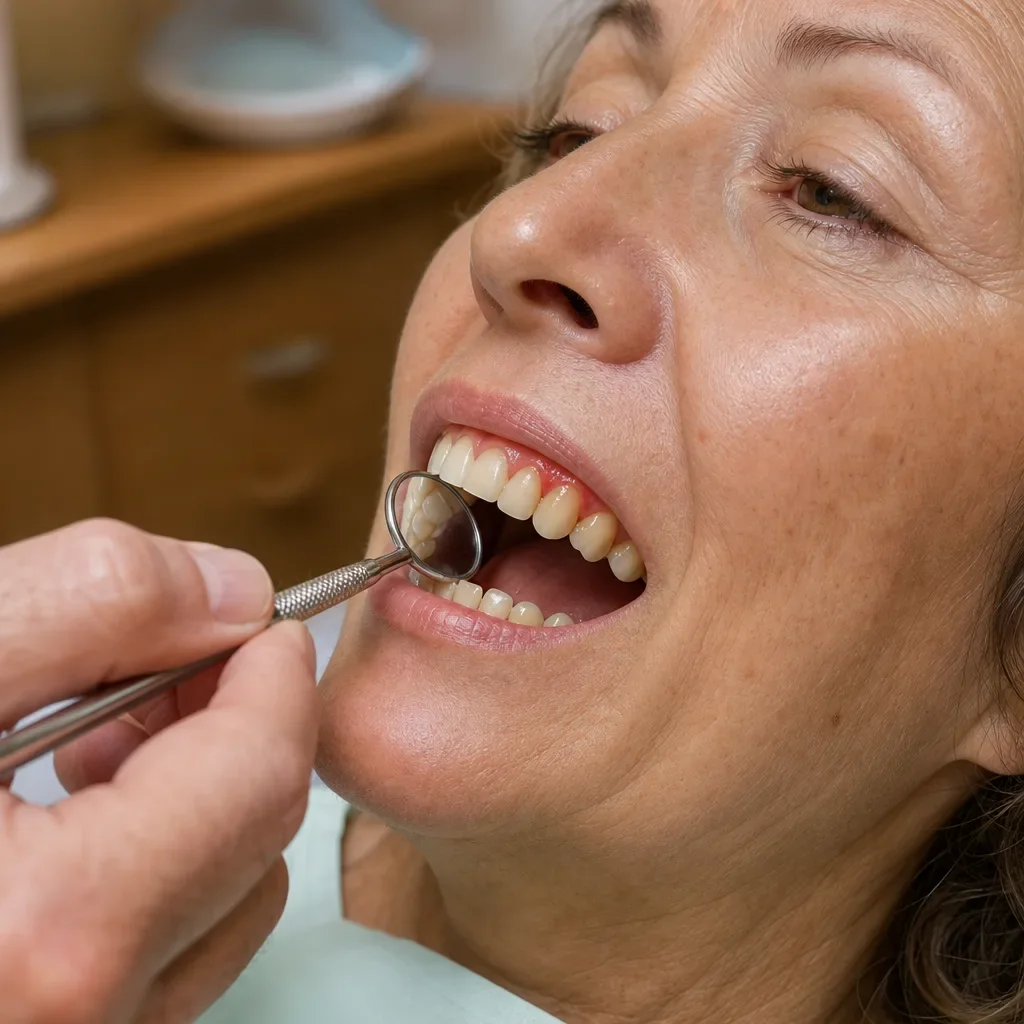
Why Home Care Alone Doesn't Decide Your Schedule
"But I brush twice a day. I floss." We hear it often, and both of those matter enormously. Neither one sets how often you need a professional cleaning, which surprises a lot of our patients.
The reason is timing. Plaque is soft and a toothbrush handles it easily. Within a day or two, minerals in your saliva harden that plaque along the gumline into tartar, and tartar doesn't come off with a brush or with floss. You can't skip a few days and make it up later.
Tartar doesn't form evenly, either. Two salivary glands empty into your mouth right at the prime buildup zones, behind your lower front teeth and on the outside of your upper back molars. So even with good habits, if there's a ridge of buildup you've never noticed with your tongue, it's probably in one of those two places, which happen to be the two hardest spots for a toothbrush to reach.
Gum pockets are the other problem. The space between gum and tooth runs a few millimeters deep when it's healthy, deeper when it's inflamed. Floss reaches the top of that space. The bacteria live at the bottom. The ADA's overview of plaque describes how it hardens into calculus once daily cleaning misses it, and why teeth get harder to keep clean from that point on.
Some things sit outside home care no matter how careful you are:
Tartar that forms below the gumline, past where bristles can flex
Deep pits and grooves in molars that hold food particles
Tight contact under the margin of a crown or bridge
Crowded lower front teeth, where floss can't lie flat against the tooth surface
Early bone changes and decay under existing fillings, visible only on digital x-rays
A version of this walks into our office every few months. Someone in their forties, electric toothbrush, flosses every night, hasn't seen a dentist in years because nothing hurt. Their gums bled a little when they brushed and they assumed that was normal. It isn't. By the time they sit down in the chair, the cleaning takes considerably longer than it would have.
That's the difficult thing about gum disease. It usually doesn't hurt until it's well along. NIDCR's overview of periodontal disease describes how the infection reaches the bone supporting your teeth, often without pain anywhere along the way.
Saliva matters more than people expect. Some medications reduce how much you produce, or thicken what's left. Milwaukee's dry indoor heat from November through March does something similar. Either way, less saliva or thicker saliva means plaque clings harder and calcifies faster. Two people with identical brushing habits can end up with different results, and that difference comes from biology and environment rather than effort.
Keep brushing. Your home care clears the soft film, a professional cleaning removes what has already hardened, and the appointment is also where we take the measurements that set your next interval. Working out what your own interval should be is part of the teeth cleaning guidance we go through with patients at every visit.

How Dentists Set Your Cleaning Interval
Your interval comes out of measurements rather than a default setting, and it changes over time.
The part that surprises people is the probing. We slide a small probe into the space between each tooth and the gum and record the depth in millimeters, all the way around, tooth by tooth. Deeper pockets give bacteria somewhere to sit where a toothbrush can't follow. Shallow is what we want.
Most of the decision comes from those numbers. We also look at how quickly tartar has returned since your last visit, whether your gums bleed when probed, and how today's x-rays compare with the last set. Bone loss shows on an x-ray long before you'd see anything in the mirror.
What a new patient exam covers:
Digital x-rays to check bone levels around each root
Periodontal pocket depths, tooth by tooth, with any bleeding points recorded
How much tartar has rebuilt since your last cleaning
Your medical history, your medications, and your daily habits
Hard-to-reach areas, signs of dry mouth, and wear from grinding
A starting interval, which we adjust at the next visit based on what we find
That last step carries more weight than the five above it combined. The interval we set is a hypothesis. Come back in four months with calm gums and minimal buildup and we can stretch it out. Come back with deeper pockets and more bleeding and we shorten it. Some patients move to three months for a while, then back to six once things settle. Your current condition sets the schedule, not a number chosen in advance.
Things that tend to shorten an interval:
Pockets deeper than 4mm, or a history of periodontal treatment
Diabetes or another condition that slows healing
Smoking or vaping
Heavy, fast tartar buildup, most often behind the lower front teeth
Dry mouth from medication
Crowns, veneers, implants, or Invisalign attachments, all of which add margins that need cleaning
Gums that swell or bleed easily, including during pregnancy
Coffee and tea stain teeth, but staining on its own doesn't change your interval.
If you don't know why you're being asked to come in at a particular frequency, ask. Ask for your pocket depth numbers while you're at it. Any practice should hand them over without hesitation.
We're at 2524 E Webster Pl #201, open Monday through Thursday, with free street and on-site parking. Schedule an appointment or call 414-963-9440 and we'll take a look at where you actually stand.
Frequently Asked Questions
How do I know if I need a cleaning every three months instead of every six?
You likely need a shorter interval if you've been treated for gum disease, your gums bleed, or tartar comes back fast between visits. That schedule is called periodontal maintenance, and it's common after deep pockets or bone loss. Smoking, diabetes, and dry mouth from medication push the interval shorter too. We track your pocket depths at every visit and adjust from there.
Can I skip the dentist if I brush and floss well?
No, home care doesn't replace a professional cleaning. Plaque hardens into tartar within a day or two, and once it's tartar, only a dental instrument removes it. Brushing and floss also can't reach the bottom of a gum pocket, where the bacteria that cause gum disease live. Even careful brushers build tartar behind the lower front teeth and outside the upper back molars, because that's where the saliva glands empty.
Does Milwaukee's winter weather affect how often I need a cleaning?
Yes, winter here can dry your mouth out and speed up buildup. Furnace heat pulls humidity out of the air, especially in older East Side apartments, and cold and allergy medicines cut saliva flow. Less saliva means less natural rinsing of your teeth. A mouth that looked fine in July can show more buildup by February.
What's the difference between a regular cleaning and periodontal maintenance?
A regular cleaning, or prophylaxis, is for gums that are healthy or close to it. Periodontal maintenance is for patients already treated for gum disease with deep pockets or bone loss, and it happens every three or four months. Gum disease bacteria repopulate those pockets faster than brushing alone can control. If you want to see what either appointment actually involves, our page on what happens at a teeth cleaning walks through it step by step.
Why do my gums bleed a little when I brush?
Bleeding gums are not normal, even a little bit. It usually means early inflammation, and it's one of the first things we watch when setting your schedule. Gum disease often causes no pain at all, which is why people put visits off while it keeps progressing. If the same spot bleeds again and again, tell us at your next appointment.
Do older fillings or crowns affect how often I need a cleaning?
Yes, older fillings and crowns have edges where plaque gathers out of reach of a toothbrush. Crowded teeth, deep molar grooves, and tight spaces under a crown margin create the same problem. Those spots need instruments rather than floss. If you have older dental work, we may set a shorter interval so buildup doesn't go unnoticed.
