Invisalign's 30-Minute Rule Explained: What It Means for Your Treatment in Milwaukee
There Are Two 30-Minute Rules, Not One
Ask ten patients about the Invisalign 30-minute rule and you'll get two different answers. One group means the daily limit on how long the trays can sit out at a stretch. The other means the short stretch right after a meal, when teeth are still loose and settling back down. Actually, both answers are correct, and mixing them up is where most tracking trouble begins.
The first is about time off your teeth. Aligners are built to be worn 20 to 22 hours a day, which leaves roughly two hours for meals, brushing, and coffee. Split those two hours across a normal day and 30 minutes becomes a sensible ceiling for any single removal. Out for lunch, back in after.
The second is about what happens the moment the trays come out. Your teeth are being moved through bone, and the bone around each root is rebuilding while that happens, which means that for a short window after removal those teeth sit a little loose in their sockets. Not wobbly. Loose enough to drift.
Leave them out too long and the teeth slide back a hair. The next tray then has to make up that difference, and that's the tray that feels impossible to seat.
We hear the same story most weeks at our office on East Webster Place. A patient says Monday's tray wouldn't go on, we ask about the weekend, and it turns out there was a long dinner, a couple of drinks, and three hours with the aligners folded inside a napkin.
A simple way to keep the two straight:
Daily off-time: no single removal much longer than 30 minutes, and under two hours total across the whole day.
After removal: get them back in within about 30 minutes, since settling starts almost right away.
Both point the same direction. Less time out means less backsliding and fewer stuck trays.
Going a minute over won't undo your treatment. The minutes accumulate, though, and most people don't notice until a tray stops going on the way it used to.
A normal meal runs like this, start to finish:
Trays out and into the case, not a napkin or a coat pocket.
Eat, and don't linger over a second cup with them still out.
Rinse with water if you can't brush yet.
Brush or swish, then dry the trays off.
Snap them back in and check the clock.
Both rules matter most in the first two or three days of a new tray, when the movement is doing its heaviest work.
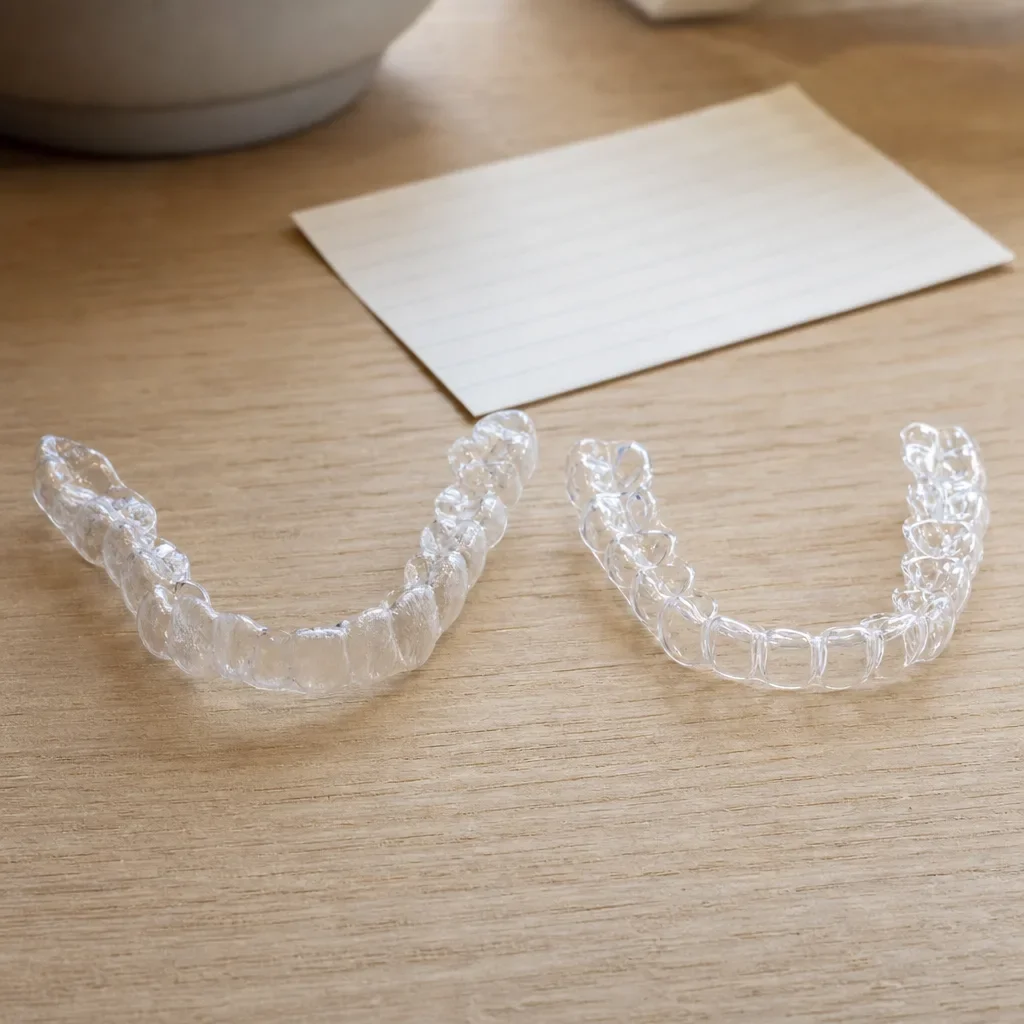
Why Waiting Before You Brush Matters
Eating changes the chemistry in your mouth, not just what's stuck between your teeth. Acid from coffee, citrus, wine, soda, even a bagel softens the outer layer of enamel for a while afterward. The softening is temporary. During that window, though, the surface is more vulnerable than usual.
Brush then and you're scrubbing softened enamel. Put an aligner over it and you've sealed that acid tight against every tooth surface with nowhere for saliva to reach.
Saliva rinses the surface, neutralizes acid, and carries minerals back into the enamel. Give it half an hour and most of that work is done. The ADA's consumer guidance on dietary acids and your teeth recommends waiting after acidic food or drink before you brush, for exactly this reason.
What's happening during those thirty minutes:
Acid levels drop back toward normal.
Saliva clears loose food off the teeth and gumline.
Minerals in saliva begin re-hardening the enamel surface.
Heat from a hot drink fades, so plastic isn't going back onto warm teeth.
Coffee and tea pigment gets diluted instead of trapped.
That last one catches people. Morning coffee drinkers finish a cup, snap the tray right back in, and a week later the plastic looks faintly yellow. That yellowing comes from coffee sitting sealed against enamel for hours, not from the aligner itself.
Fit is a separate issue from enamel. Aligners are made to sit against clean, dry teeth. A film of food creates a thin barrier, the tray doesn't seat all the way down, and a tray that isn't fully seated isn't moving anything. Repeat that across a few weeks and your tracking drifts. That's how people end up needing extra trays they didn’t plan for.
When this happens once or twice, it’s usually not a big deal. But letting it become an established daily habit is where you’ll run into trouble with the fit of your trays.
The fix is easier than the explanation. Rinse with plain water the moment you finish eating, which clears most of the acid and debris on its own. Wait out the rest of the window, then brush, then re-tray. Water is the only thing you can drink with aligners in, and it does more work than people expect.
Acid also feeds the bacteria behind cavities, which is worth knowing when trays hold everything against your teeth for 22 hours a day. NIDCR's overview of how tooth decay develops walks through that cycle.
Small habits like this one are part of the practical invisalign guidance we go over at your check-in visits.
Fitting the Rule Into a Real Daily Schedule

Theoretically, 22 hours per day should be easy, but then real life creeps in. There's a commute down Lake Drive, a nine o'clock meeting with coffee already in hand, and a lunch you eat at your desk in twelve minutes flat.
A real day looks like this. Thirty minutes of trays-out time per meal is the working budget. Three meals plus one snack still lands under two hours, which keeps you inside the 22-hour target with room left over. Sequencing matters more than willpower.
Morning: trays out, eat, brush, trays in. Fifteen to twenty minutes for most people.
Coffee on the way in: black with the trays in, or finish it before you leave and count it toward breakfast. Cream and sugar mean they come out.
Lunch: out, eat, rinse in the office bathroom, brush if you can. Back in before you sit down.
Afternoon snack: this is the one that eats your hours. Choose water, or fold the snack into lunch.
Dinner: your longest stretch, and that's fine. A relaxed forty-minute dinner once or twice a week won't sink anything.
Evening: brush, floss, trays in, and leave them until morning.
That adds up to roughly ninety minutes out and twenty-two and a half hours in. Bingo.
Patients track their meals carefully and forget everything else. The half cup of coffee at three. The handful of pretzels at a Brewers game. Those small stretches are where the hours leak out.
Grazing all afternoon instead of eating one real snack
Leaving trays out after dinner in case dessert happens
Long weekend brunches in the Third Ward that run past an hour
Forgetting to put them back in after a work happy hour
Taking them out early for food that hasn't arrived yet

One patient, a nurse working twelve-hour shifts, was sure her schedule made Invisalign impossible. It didn't. She ate on her breaks, kept a travel toothbrush in her locker, and finished on plan. Her method was dull and it worked: the trays never came out unless food was already in front of her.
Winter helps a little here. Cold months mean fewer iced coffees carried around for an hour and more hot meals eaten sitting down. Summer is the harder season, with patio drinks and festival food.
Blow it one day and nothing catastrophic happens. You wear that tray an extra day or two and keep going. What happens across weeks matters far more than any single Saturday.
If a tray has been fighting you and you're not sure why, bring it in and we'll look at it in person. Schedule an appointment or call the office at 414-963-9440. We're open Monday through Thursday.
Frequently Asked Questions
What happens if I go over the 30-minute rule by accident?
One slip won't undo your progress, but a pattern of long removals will slow you down. Teeth settle back a little each time the trays are out too long, so the next aligner has more ground to make up. A single long lunch is not a problem. Wear time is the biggest factor in how fast treatment goes at any age, which we cover in our guide to the best age to get Invisalign.
How do I know if my aligners aren't tracking correctly?
A tray that won't seat flush, feels loose in spots, or leaves a gap near the back teeth is usually a tracking problem. This often traces back to eating with trays in, or leaving them out too long after a meal. Catch it early rather than late. If a tray feels off for more than a day or two, call us instead of waiting it out.
Does Milwaukee weather affect how my aligners fit or feel?
Cold mornings can make the plastic feel stiffer when you first put a tray in. Warming it in your palm for a few seconds helps it seat. Hot drinks matter more than the weather outside, since heat can warp aligner plastic if a tray sits somewhere warm.
Can I drink coffee with my Invisalign aligners in?
No, take your aligners out for everything except plain water. Coffee and tea stain the plastic, and hot or acidic drinks soften the enamel underneath. Rinse with water when you finish your cup, wait out the acid window, then put the trays back in.
What's the biggest misconception people have about the 30-minute rule?
Most people think there is one rule when there are two: how long the trays can stay out, and how fast they go back in after eating. Mixing them up leads to habits like brushing too soon or stretching dinner past an hour. Both rules exist because of how teeth move through bone, which we explain in our guide to whether Invisalign reshapes your teeth.
Is it okay to skip brushing and just rinse before putting aligners back in?
Yes, a water rinse is a solid short-term fix when you can't brush. It clears most of the food and acid, which protects both your enamel and the fit of the tray. Brushing is still better when you have the time.
